The Largest Mass Poisoning in Human History; WHO - The Bengal Delta Arsenic Crisis
Wed Jun 24 2026413
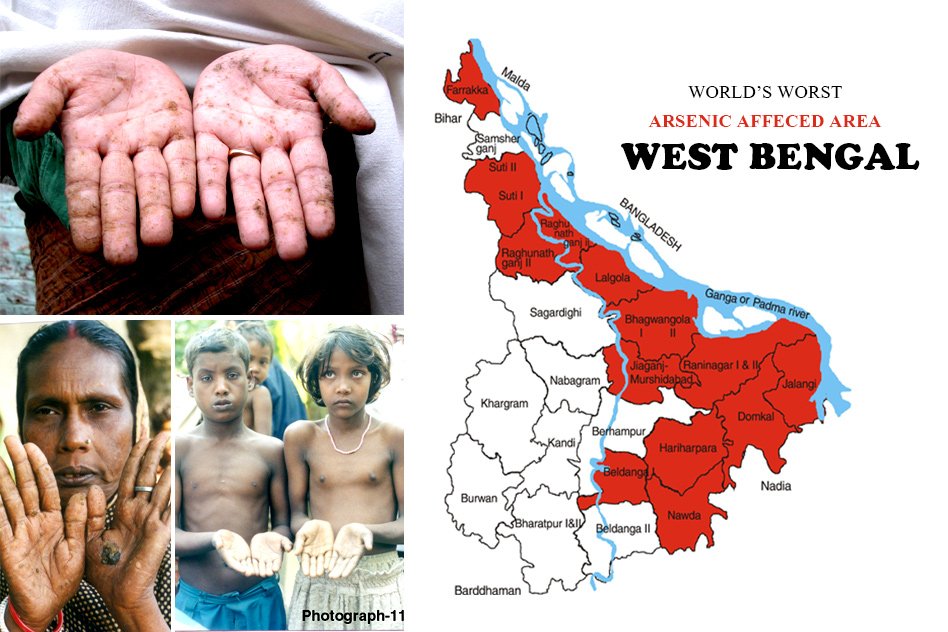
Bengal Delta is universally recognized by the global scientific and public health communities as the largest mass poisoning of a human population in recorded history. Spanning the nation of Bangladesh and the neighboring Indian state of West Bengal, an estimated 35 to 77 million people have been chronically exposed to severe, toxicological levels of naturally occurring inorganic arsenic through both their primary drinking water supplies and the regional agricultural network.
The Hazard Assessment Failure
In the 1960s and 1970s, Bangladesh suffered infant mortality rates exceeding 200 per 1,000 live births, driven primarily by gastrointestinal pathogens in surface water. In response, agencies including UNICEF and the World Bank initiated a massive campaign to transition the population to groundwater, installing millions of shallow tube-wells. While successful in drastically reducing child mortality, this epidemiological triumph was undermined by a catastrophic hazard assessment failure.
The scientific community operated on the assumption that deep groundwater was inherently pristine. Routine water quality tests omitted arsenic entirely. This systemic myopia was highlighted in the landmark English tort case, Sutradhar v. Natural Environment Research Council (NERC). A Bangladeshi villager sued the British Geological Survey (BGS) after developing arsenicosis. The BGS had conducted a regional hydrochemistry study testing for 31 trace elements but omitted arsenic. The House of Lords dismissed the claim on the grounds of "proximity," ruling that expert knowledge does not intrinsically generate a global duty of care. However, the case perfectly encapsulates the procedural failure of the era: global agencies solved a microbial crisis with a highly focused intervention, blindly trading it for a geological catastrophe.
The Food Safety Threat
The crisis extends beyond drinking water through the bioaccumulation of inorganic arsenic in flooded paddy rice (Oryza sativa L.) cultivated during the dry Boro season using contaminated groundwater.
The crisis extends beyond drinking water through the bioaccumulation of inorganic arsenic in flooded paddy rice (Oryza sativa L.) cultivated during the dry Boro season using contaminated groundwater.
Because arsenite chemically mimics silicic acid —sharing a tetrahedral geometry and high pKa (~9.2)—the rice plant cannot differentiate between the two. Arsenite inadvertently hijacks the plant's high-affinity silicon aquaglyceroporin channels, entering via OsLsi1 and exiting toward the xylem via OsLsi2. Due to the high baseline consumption of rice in Bangladesh (>400g/day), this mechanism creates a massive chronic dietary exposure that renders isolated drinking-water interventions insufficient.
The Toxicology
Inorganic arsenic is a Class 1, non-threshold human carcinogen. To quantify this risk, the Joint FAO/WHO Expert Committee on Food Additives (JECFA) established a $BMDL (Benchmark Dose Lower Confidence Limit for a 0.5% increased lung cancer incidence) of just 3.0 µg/kg of body weight per day. Concurrently, the U.S. EPA calculates a combined Oral Cancer Slope Factor (CSF) of 32 (mg/kg-day) for bladder and lung cancer risks.
Given this extreme toxicity, the WHO's 10 µg/L "safe" limit for drinking water is highly compromised. Toxicological models from the early 1990s indicated that achieving a standard regulatory target risk level of 1 times 10(-5) requires a maximum concentration of just 0.17 µg/L. The 10 µg/L limit was explicitly designated as a provisional guideline based entirely on 1993 constraints in analytical achievability and municipal filtration performance, not biological safety. Tragically, the government of Bangladesh still relies on an archaic 50 µg/L national standard.
Current Situation and Evolving Government Action
By 2024–2026, climate change has compounded the crisis. Sea-level rise is driving saltwater intrusion into coastal aquifers, altering redox chemistry and pushing arsenic concentrations above 300 µg/L in some areas.
The Bangladeshi government relies heavily on installing expensive deep tube wells (DTWs) (>150 meters) to reach safe Pleistocene aquifers. However, allocative inefficiencies persist; wells are often placed based on political patronage rather than epidemiological need, costing ~$150 per person protected, compared to <$1 per person for simple informational testing/well-sharing campaigns. To combat this, digital governance tools like the "Arsenic Dashboard" are actively being piloted. Utilizing machine-learning to gap-fill contamination data, this dashboard provides local engineers with granular risk maps to ensure apolitical, data-driven well allocation.
Despite these steps, progress is insufficient. The government must revise its 50 µg/L standard to the 10 µg/L WHO benchmark, institute strict medical surveillance, and aggressively incentivize dry-season crop diversification.
Mitigation Strategies
Given widespread poverty, high-tech centralized water treatment is economically unviable. Mitigation must focus on a ruthless cost-benefit analysis of point-of-use (POU) filtration and frugal agricultural adaptations.
Cost-Benefit Analysis of POU Filtration
Filter Technology Primary Mechanism & Drawbacks
SONO Filter
[cite: 35, 36, 37]
Composite Iron Matrix (CIM)
Great flow rate.
Drawback: Prohibitive upfront cost for extreme poverty without subsidies.
Kanchan Filter
[cite: 36, 38, 39]
Adsorption via un-galvanized iron nails
Drawback: Wet/dry cycles passivate the iron nails, stopping active As scavenging.
3-Kolshi Method
[cite: 35, 36, 40]
Coagulation/filtration (iron filings)
Drawback: Very slow flow (<1 L/hr) and rapid clogging.
OSRSF
[cite: 35]
Adsorption via naturally abundant laterite (red) soil.
Benefit: Ruthlessly frugal. Two passes make highly contaminated 500 ppb water safe.
Agricultural Mitigation:
To combat food chain bioaccumulation, Alternate Wetting and Drying (AWD) is highly effective. By allowing fields to dry intermittently, oxygen re-enters the soil, oxidizing ferrous iron back to ferric iron oxyhydroxides. This creates a massive mineral sink that aggressively re-adsorbs arsenite away from rice roots. AWD costs $0 to implement, reduces grain arsenic by ~1.5x, slashes irrigation water/fuel costs by up to 30%, and cuts methane emissions by 45% to 90%. Furthermore, crop diversification into aerobic dryland crops (maize, wheat) entirely bypasses the arsenic mobilization cycle