Per- and polyfluoroalkyl substances, PFAS, (Forever Chemical) in Sewage Sludge
Sun Aug 30 2026186
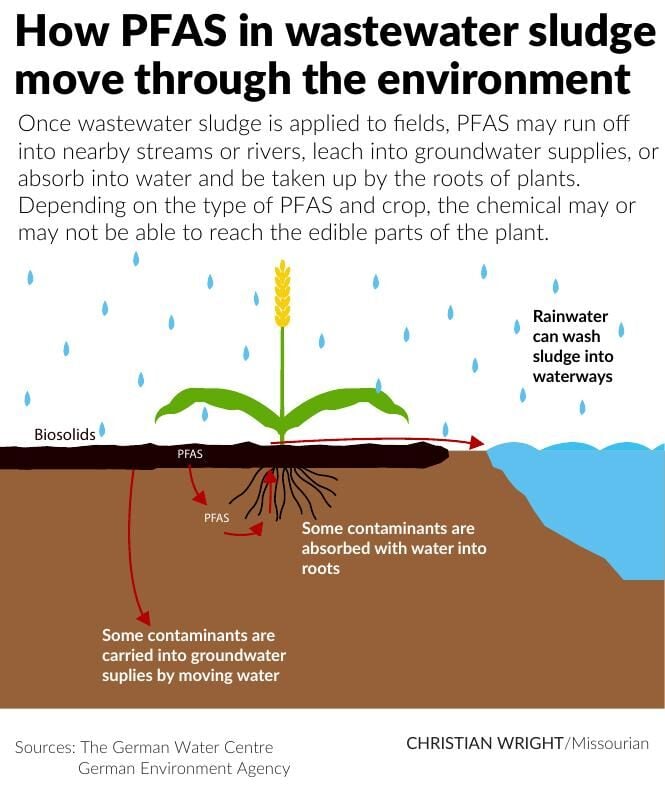
The circular economy is built on a beautiful idea: there is no such thing as waste. In an ideal world, human biological waste is treated at a local plant and returned to the soil as nutrient-dense fertilizer. It perfectly mimics nature. But this closed-loop system has a catastrophic, man-made flaw. The very society trying to recycle its waste is the same one that spent decades coating everyday products in indestructible, non-stick molecules.
Per- and polyfluoroalkyl substances (PFAS) were designed to repel water and grease using carbon-fluorine (C-F) bonds, which boast a staggering bonding energy of 485 kJ/mol. Today, these "forever chemicals" are heavily saturating the municipal sewage sludge intended to fertilize the global food supply.
Why We Need Sludge
It might seem obvious to simply stop using sewage sludge, but global agriculture desperately needs it due to the massive energy costs of synthetic nitrogen and the rapid depletion of global phosphorus.
First, creating synthetic nitrogen fertilizer relies on the Haber-Bosch process. This brute-force industrial method requires extreme heat and pressure to pull nitrogen from the air. It is incredibly energy-hungry, consuming 1 to 2 percent of total global energy and up to 5 percent of the world's natural gas.
Second, we are running out of accessible phosphorus, a biological necessity for all living cells. Unlike nitrogen, phosphorus must be mined. We are approaching "Peak Phosphorus," and a staggering 77 percent of the world's remaining commercially viable phosphate rock is located in Morocco. Because an average human excretes about 1.2 grams of phosphorus daily, municipal wastewater represents a massive, renewable mine for this critical nutrient. We need the sludge to grow our food, but we need it to be clean.
EFSA’s 2026 Limits
The sludge is far from clean. While older PFAS compounds have been restricted, the chemical industry replaced them with ultra-short-chain alternatives. Many of these break down into trifluoroacetic acid (TFA). TFA is highly mobile and easily bypasses standard water filtration, permeating soil, groundwater, and crops.
On July 22, 2026, the European Food Safety Authority (EFSA) drastically changed the regulatory landscape. Recognizing that TFA disrupts vital thyroid hormones and can impact fetal development, EFSA slashed the safe daily intake limit for TFA by 72 percent, dropping it to a microscopic 0.014 milligrams per kilogram of body weight.
To understand how dangerous this is, think of the human body as an un-wringable sponge. If you pour heavy oil into a sponge, it binds to the fibers permanently. Every subsequent exposure adds another drop. Because the sponge can never be wrung out, even microscopic, legally "tolerable" daily drops of forever chemicals will eventually build up until the system becomes toxic.
Contaminated Dairy
When contaminated sludge is applied to fields, older, long-chain PFAS compounds bind tenaciously to the soil and are absorbed by deep-rooted crops like alfalfa. This creates a massive vulnerability when those crops are fed to dairy cows.
Unlike older agricultural pollutants that harmlessly store themselves in animal fat, PFAS are "proteinophilic." In a cow, these chemicals bind almost exclusively to blood proteins like serum albumin. Because they attach to proteins, they have a remarkably slow elimination rate; it takes months for a cow to clear the chemicals from its system. During this entire period, the cow actively excretes the toxins into its milk, turning a localized soil issue into a severe food safety threat for the dairy industry.
The Solution: Supercritical Water Oxidation
Standard wastewater treatment plants cannot filter out PFAS. Even standard incineration often fails, sometimes releasing toxic gases into the atmosphere instead of destroying the chemicals. To make sludge safe, the chemicals must be physically annihilated.
The most effective method is Supercritical Water Oxidation (SCWO). When water is pushed past its critical point—above 374 °C and 22.1 MPa (221.1 bar) of pressure—it becomes a highly destructive solvent. In this extreme state, recalcitrant PFAS compounds can be completely broken apart. By adding catalysts like iron, SCWO can achieve destruction rates exceeding 99.7 percent, neutralizing the toxic hydrofluoric acid and turning dangerous sludge into clean water and inert salts. Startups like 374Water are currently working to commercialize this technology for municipal plants.
Conclusion
Supercritical Water Oxidation is an incredible technological achievement, but we cannot rely solely on advanced physics to clean up a chemical mess. The flaw of the circular economy is the assumption that natural systems can safely process synthetic, unregulated industrial waste. If we are forced to rely on sewage sludge to survive the impending fertilizer crisis, we must ensure our waste is clean from the start. Ultimately, the only way to safeguard our food supply is to ban PFAS chemicals entirely at the factory level.